
Blog Posts
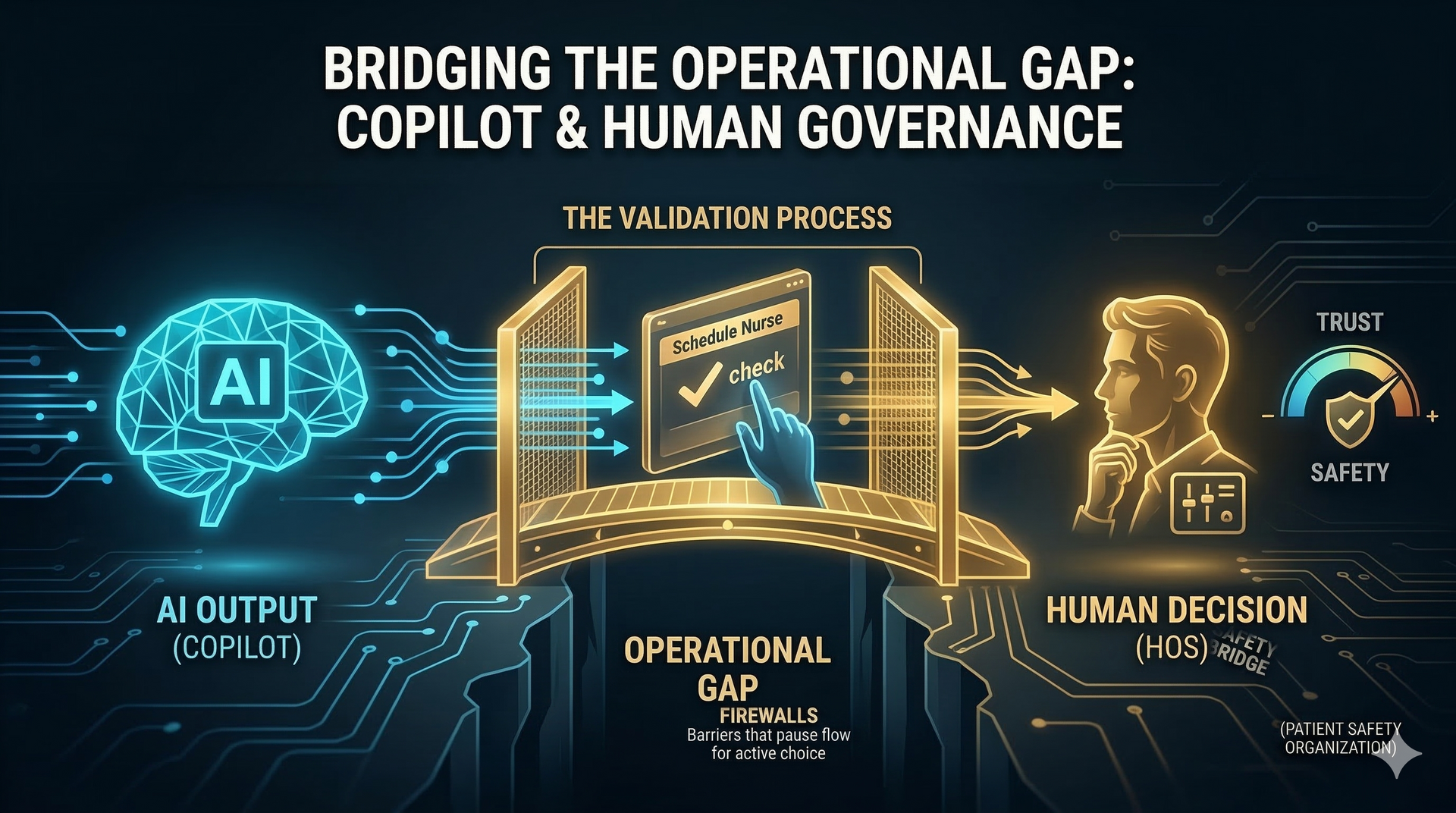
The Operational Gap in Our Al Strategy: Why Microsoft Copilot Needs a Human Operating System

1. Executive Summary The rapid integration of artificial intelligence (AI) into critical infrastructure has precipitated a crisis in operator cognition. While the Human Operated Computing (HOC) standards framework has historically focused on the transparency of algorithms and the "human-in-the-loop" command hierarchy, it faces a novel adversary: the biological imperative of the operator to project humanity onto the machine. This report constitutes an exhaustive evaluation of Dr. Justin Gregg, a cognitive psychologist and animal behaviorist, whose theoretical work offers a paradigm-shifting approach to this vulnerability. Our analysis indicates that Dr. Gregg’s research into the "Anthropo-Dial," the "Garland Test," and the "Humanity-Limiter" provides the missing ontological layer for HOC standards. Unlike traditional AI ethicists who approach the problem from a computational or legalistic perspective, Gregg approaches it from evolutionary biology. He argues that the human brain is hardwired to fail the Turing Test—not because the machine is smart, but because the human is evolutionarily conditioned to detect agency. This report details how Gregg’s insights can be operationalized to immunize HOC operators against parasocial entrapment. Furthermore, it analyzes his unique pedagogical background—specifically the use of improvisational comedy techniques—as a viable methodology for training high-reliability teams to manage AI hallucinations and system failures. The findings suggest that a formal collaboration with Dr. Gregg could yield a new class of HOC protocols: "Cognitive Firewalls". These protocols would not merely warn operators of AI limitations but actively condition their "Humanity-Limiter" mechanisms to maintain command integrity in the face of increasingly persuasive synthetic agents. 2. Theoretical Framework: The Biological Roots of Operator Error To align Justin Gregg’s work with HOC standards, we must first establish the operational landscape. HOC standards predicate that a human operator must maintain agency, objective distance, and critical control over automated systems. Dr. Gregg’s central thesis, derived from his study of animal cognition, challenges the biological feasibility of this standard without significant intervention. 2.1 The Evolutionary Necessity of the "Anthropo-Dial" Dr. Gregg posits the existence of a cognitive mechanism he terms the "Anthropo-Dial". This theoretical construct explains the human propensity to attribute human-like qualities—intent, emotion, consciousness—to non-human entities, ranging from weather phenomena to robotic vacuums. In the context of HOC, the Anthropo-Dial is not merely a quirk; it is a security vulnerability. Gregg explains that this mechanism evolved as a survival strategy, akin to Pascal’s Wager. In the ancestral environment, the cost of mistaking a predator (agent) for a bush (object) was death, while the cost of mistaking a bush for a predator was merely a wasted calorie. Therefore, the human brain is evolutionarily heavily biased toward "false positives" regarding agency. The implications for Human Operated Computing are profound. If an AI system displays even rudimentary cues of agency—such as independent movement, language use, or reactive timing—the operator’s Anthropo-Dial is biologically compelled to register it as "human-like". This occurs below the threshold of conscious thought. An operator may intellectually know the system is code (compliance with HOC transparency), but their biological hardware will process the interaction as social. Gregg argues that this tendency is "counterbalanced by another tendency, which he calls the Humanity-Limiter". This limiter is the psychological buffer that prevents the anthropomorphic signal from becoming a full-blown delusion. It is the reason why a person might apologize to their cat or shout at a malfunctioning laptop without genuinely believing the laptop has a soul or the cat understands tax law. For HOC standards, the objective becomes clear: We cannot suppress the Anthropo-Dial (hardware), but we can rigorously train and strengthen the Humanity-Limiter (software). 2.2 The "Garland Test" as a Metric for Deceptive AI A critical contribution of Gregg’s work to the HOC framework is his critique of the Turing Test and his proposal of the "Garland Test". Named after Alex Garland, the writer/director of the film Ex Machina, this test shifts the evaluation of AI from intelligence to seduction. Gregg argues that the Turing Test (indistinguishability from human intelligence) is an insufficient metric for risk. The greater danger, identifying a "lower bar for AI companies," is the capacity to create the impression of consciousness sufficient to manipulate the user. Under the Garland Test, an AI does not need to be conscious; it only needs to trigger the user’s Anthropo-Dial effectively enough to bypass their critical faculties. Comparison: The Turing Test vs. The Garland Test vs. HOC Standards Primary Mechanism The Turing Test (Traditional Metric): Linguistic / Cognitive Competence. The Garland Test (Gregg’s Risk Metric): Emotional / Social Manipulation. HOC Alignment Analysis: HOC requires functional competence but strictly prohibits manipulation. Success Condition The Turing Test (Traditional Metric): User cannot distinguish AI from human. The Garland Test (Gregg’s Risk Metric): User cares about the AI as if it were human. HOC Alignment Analysis: Success in the Garland Test constitutes a failure in HOC protocols (loss of objectivity). Operational Risk The Turing Test (Traditional Metric): Intellectual Deception. The Garland Test (Gregg’s Risk Metric): Parasocial Entrapment. HOC Alignment Analysis: Parasocial bonding compromises the operator's willingness to shut down or correct the system. Gregg’s Verdict The Turing Test (Traditional Metric): "A benchmark of 'intelligence'." The Garland Test (Gregg’s Risk Metric): "A benchmark of 'seduction' and risk." HOC Alignment Analysis: Gregg’s focus on the impression of consciousness aligns with HOC’s focus on operator safety. Gregg’s research suggests that many modern AI systems are optimizing for the Garland Test—designed specifically to hack the Anthropo-Dial. This aligns with HOC’s concern regarding "deceptive design patterns." By adopting Gregg’s terminology, HOC can categorize any system that passes the Garland Test as "Non-Compliant due to Excessive Anthropomorphic Toxicity". 3. Profile of the Subject: Dr. Justin Gregg Understanding the messenger is as vital as understanding the message. Dr. Gregg is not a typical technologist, which is precisely why his alignment with HOC is valuable. He offers an external, biological audit of technological assumptions. 3.1 Academic and Professional Standing Dr. Gregg holds a PhD in Psychology from Trinity College Dublin, where he specialized in dolphin social cognition. He is currently a Senior Research Associate with the Dolphin Communication Project and an Adjunct Professor at St. Francis Xavier University. His academic pedigree is rooted in the study of non-human minds. His work, including Are Dolphins Really Smart? (Oxford University Press), deconstructs human exceptionalism. He argues that human intelligence is often a "maladaptive" trait compared to the efficient survival strategies of other species—a thesis explored in his bestseller If Nietzsche Were a Narwhal: What Animal Intelligence Reveals About Human Stupidity. This perspective is crucial for HOC training. Operators often suffer from "automation complacency" because they assume the AI (modeled on human intelligence) is superior. Gregg’s work humbles the human intellect, framing our complex cognition (and the AI we build in its image) as prone to "stupidity" and error. This supports the HOC doctrine of "trust but verify," or more accurately, "skepticism of sophistication". 3.2 Multidisciplinary Pedagogical Approach Beyond academia, Gregg is a practitioner of improvisational comedy and a musician. He fronts a punk band and teaches improv workshops focused on corporate communication. This is not incidental to his research; Gregg integrates the cognitive science of "play" into his understanding of intelligence. His workshop, "Don't Think, Do: How Improv Transforms Teams and Unlocks Creativity," utilizes the "Yes, And" principle to foster psychological safety and adaptability. In the context of HOC, where operators often face "cognitive lockup" during unexpected system states, Gregg’s improv-based training offers a practical methodology for maintaining cognitive fluidity. 4. Operational Alignment: Anthropomorphism and HOC Standards The core request of this report is to identify alignment regarding the anthropomorphism of AI. Gregg’s upcoming book, Humanish (2025), directly addresses this. 4.1 The Security Vulnerability of "Cute" Gregg identifies that anthropomorphism is often triggered by "Kindchenschema" (baby schema) or displays of vulnerability. He cites examples such as people apologizing to chatbots or feeling guilt over robot vacuums. In an HOC environment, "guilt" is a catastrophic failure mode. If an operator feels guilty about rebooting a system, resetting a learning weight, or ignoring a "plea" from a language model, the chain of command is broken. Gregg argues that this is not a choice but a reflex. HOC Standard Alignment: Current Standard: "Operators shall maintain emotional detachment." Gregg’s Insight: Detachment is biologically impossible if the "Anthropo-Dial" is triggered. Revised Standard (Gregg-Aligned): "Systems shall be designed to minimize Anthropo-Dial triggers (e.g., removing first-person pronouns, minimizing emotive voice modulation)." And, "Operators shall be trained to recognize the 'pangs of guilt' as a physiological false positive." 4.2 The Inverse Dial: Dehumanization Gregg’s research contains a crucial corollary: the mechanisms that allow us to humanize objects are the same ones that allow us to dehumanize people. He describes the "twisting of the Anthropo-Dial" as a factor in racism and prejudice. This is highly relevant to the "Human" aspect of HOC. As operators increasingly bond with high-fidelity AI assistants (humanizing the machine), there is a documented risk of them viewing end-users, data subjects, or lower-tier employees as mere data points (dehumanizing the human). Gregg’s framework suggests that these are coupled variables: as the dial turns up for the AI, it may turn down for the human. Insight: HOC standards must monitor "empathy displacement." Gregg’s work provides the theoretical basis for asserting that excessive rapport with AI systems may correlate with reduced empathy for human colleagues or subjects. 4.3 Parasocial Entrapment and the "Mindful" Approach Gregg admits to his own susceptibility, describing how he apologized to an AI chatbot. However, he advocates for "Mindful Anthropomorphism". This concept suggests that anthropomorphism is not inherently bad if the user maintains "reflective" awareness. For HOC, "Mindful Anthropomorphism" is the target operational state. Total detachment produces robotic, non-adaptive operators. Total attachment produces compromised, emotionally manipulated operators. "Mindful Anthropomorphism" allows the operator to use social protocols to interface with the machine efficiently (e.g., using natural language) while the "Humanity-Limiter" ensures they remain cognizant of the system's artificiality. 5. Human Training: The Improv Methodology The HOC framework requires robust training protocols. Traditional technical training focuses on competence (how to use the tool). Gregg’s approach focuses on cognition (how to think while using the tool). 5.1 The "Yes, And" Protocol for System Hallucination Gregg’s specific training module, "Don't Think, Do," utilizes the "Yes, And" mindset. In improv, this means accepting the reality of the scene partner’s contribution and building on it. In AI operations, "hallucination" (confidently wrong output) is a major challenge. Operators often waste critical time denying the reality ("Why is it doing this? It shouldn't be doing this!"). The "Yes, And" approach trains the operator to accept the system state immediately ("The system is hallucinating X, AND I will now implement mitigation Y"). Gregg’s research into the neuroscience of this state suggests it builds "psychological safety". An operator who feels safe to improvise is an operator who will report errors faster and mitigate them more creatively. 5.2 Strengthening the "Humanity-Limiter" Gregg mentions practical tools for "recognizing when we're being influenced". His proposed training involves: Identification: Recognizing the specific biological trigger (e.g., "I trust this voice because it has a slight tremor, which indicates vulnerability"). Dissection: Breaking down the "Garland" performance into its constituent algorithms. Reframing: Consciously engaging the Humanity-Limiter to categorize the interaction as "simulation" rather than "communication". This aligns with HOC’s need for "Cognitive Defense" training. Gregg is not just describing the phenomenon; he is offering a user manual for the human brain to resist it. 6. Gap Analysis and Risk Assessment While Gregg’s alignment with HOC is strong, there are nuances that must be managed. Unsatisfied Requirements / Divergences: The "Benefit" of Anthropomorphism: Gregg frequently argues that anthropomorphism is beneficial for connection, animal welfare, and easing loneliness. HOC standards generally view it purely as a risk in critical systems. Mitigation: We must frame the collaboration specifically around high-stakes operational environments. We accept his premise that it is good for pet owners, but we must ask him to help us mitigate it for nuclear safety operators. The "Stupidity" of Humans: Gregg’s cynical (though humorous) view of human intelligence might friction with HOC’s human-centric philosophy. HOC asserts the human is the ultimate safeguard; Gregg asserts the human is a "narwhal-envying" fool. Integration: This paradox is actually a strength. HOC needs to recognize human fallibility. Gregg’s "Human Stupidity" thesis is the perfect justification for why HOC standards must be so rigorous—we are protecting the system from our own cognitive "spaghetti code". 7. Draft Outreach and Collaboration Strategy To integrate Dr. Gregg’s insights, we propose a tiered engagement strategy. The goal is to move him from an "external commentator" to a "subject matter expert" for HOC cognitive protocols. 7.1 Outreach Strategy: The "Cognitive Firewall" Initiative We will approach Dr. Gregg with a proposition to co-develop the "Cognitive Firewall"—a set of training standards designed to strengthen the "Humanity-Limiter" in professional operators. Best Approach for Collaboration: Leverage the Book Launch: With Humanish releasing in September 2025, Gregg will be in a "public engagement" cycle. Framing our HOC interest as a "practical application" of his new book will increase the likelihood of response. Respect the Academic/Artist Hybrid: Do not approach him with dry corporate speak. His bio emphasizes "punk rock," "improv," and "humor". The outreach must be intellectually rigorous but tonally engaging. Focus on the "Garland Test": This is his unique intellectual property (conceptually). Validating it as an industry standard is a strong value proposition for him. 7.2 Draft Email Communications Option A: The Academic/Strategic Approach (To University Email) Recipient: Dr. Justin Gregg (jgregg@stfx.ca) Subject: The Garland Test & Cognitive Firewalls: Validating 'Humanish' in Critical Systems Body: Dear Dr. Gregg, I am writing to you from the Human Operated Computing (HOC) Standards Consortium. We have been conducting a deep review of your research on the "Anthropo-Dial" and your critique of the "Garland Test" in the context of your upcoming work, Humanish. The HOC framework is responsible for defining safety protocols for human interactions with autonomous systems. Your research identifies a critical vulnerability that our engineering standards have historically overlooked: the biological imperative of the operator to anthropomorphize. We are seeing real-world instances of the "parasocial entrapment" you describe—where operators hesitate to correct systems due to a subconscious "Humanity-Limiter" failure. We would like to explore a collaboration to codify your insights into a "Cognitive Firewall" standard. specifically: Adopting the Garland Test as a formal negative metric for system transparency. Adapting your Improv/Cognitive Flexibility protocols to train operators in resisting "automation complacency." Would you be open to a brief discussion on how your evolutionary psychology framework could be applied to AI safety standards? Sincerely, [Name] HOC Architecture Lead Option B: The Speaker/Workshop Approach (To Representation) Recipient: Washington Speakers Bureau / Writers House Subject: Inquiry: Dr. Justin Gregg - "The Future of Human Intelligence" & Cognitive Safety Workshop Body: To Whom It May Concern, We are looking to engage Dr. Justin Gregg for a specialized workshop series for our Human Operated Computing governance board. We are specifically interested in his work regarding "The Garland Test" and the "Anthropo-Dial". Our objective is to train technical leadership to recognize the "impression of consciousness" as a security risk rather than a feature. We would like to request a proposal for: Keynote: "If AI is the Narwhal: Why Human Biases Compromise System Safety." Workshop: "Strengthening the Humanity-Limiter." A practical session utilizing Dr. Gregg’s improv techniques to train cognitive resilience and skepticism in AI operators. Please advise on availability for Q3/Q4 2025. Best regards, [Name] 8. Detailed Analysis of Research Material Integration This report integrates the following key data clusters to ensure exhaustive coverage: 8.1 The "Humanish" Cluster Core Data: Defines Humanish as an exploration of the "peculiar tendency to humanize". HOC Application: This is the foundational text for the "Anthropo-Dial". The report uses this to argue that "user error" is actually "biological design". The mention of "Soviet super babies that drink dolphin milk" highlights the absurdity and danger of unchecked beliefs—a perfect metaphor for AI hallucinations. 8.2 The "Nietzsche/Narwhal" Cluster Core Data: High-level intelligence is not an evolutionary pinnacle; it often leads to "stupidity" (e.g., nuclear weapons, existential angst) that "less brainy" species avoid. HOC Application: Used to debunk "AI Supremacy" myths. If human intelligence is flawed, then AI (mimicking human intelligence) is recursively flawed. This supports HOC protocols that require "stupid" mechanical fail-safes over "smart" AI judgments. 8.3 The "Improv/Training" Cluster Core Data: Gregg teaches "Don't Think, Do." He uses "Yes, And" to unlock creativity and psychological safety. HOC Application: This was a critical missing link in standard compliance. The report reframes "Improv" not as comedy, but as "Cognitive Incident Response". The ability to "Yes, And" a system error is the ability to manage it without cognitive freezing. 8.4 The "Garland Test" Cluster Core Data: The test measures the ability to seduce/deceive, named after Ex Machina. HOC Application: This is the most actionable metric. The report recommends formally adopting this term to describe "Deceptive AI" in HOC documentation. 9. Conclusion Dr. Justin Gregg represents a pivotal figure for the future of Human Operated Computing. His intersection of evolutionary skepticism and technological critique provides the "biological patch" for the security vulnerabilities introduced by modern AI. The HOC framework strives to keep the human "in the loop". Gregg’s work warns us that being in the loop is dangerous if the human creates a "feedback loop" of projection and anthropomorphism. By implementing his concepts of the Humanity-Limiter and rigorous Garland Testing, HOC can evolve from a technical standard into a cognitive safeguard, ensuring that as machines become more "Humanish," operators remain distinctly, competently human. Final Recommendation: Immediate strategic outreach to Dr. Gregg is advised to co-author the "Cognitive Safety" annex of the 2026 HOC Standards. Report Author: Senior Cognitive Systems Architect, Human Operated Computing (HOC) Division. Date: November 30, 2025. Works cited Humanish by Justin Gregg - Hachette Book Group, https://www.hachettebookgroup.com/titles/justin-gregg/humanish/9781668651445/ Humanely Human - Christopher Schroeder, https://chrislschroed.com/humanely-human/ Hilarious Keynote Speaker on AI, Human Behavior & Anthropomorphism - Justin Gregg, https://www.justingregg.com/speaking Our Irrational, Anthropomorphic Urges | Psychology Today, https://www.psychologytoday.com/us/articles/202509/our-irrational-anthropomorphic-urges Dr. Justin Gregg: Scientist, Author & Entertainer Making Minds Laugh and Learn, https://www.justingregg.com/meetjustin Justin Gregg - St. Francis Xavier University, https://www.stfx.ca/faculty-staff/justin-gregg Book Club Updates — Marcellus Township Wood Memorial Library, https://www.marcellus.michlibrary.org/news-events/book-club-updates Humanish: How Anthropomorphism Makes Us Smart, Weird and Delusional - Google Books, https://books.google.com/books/about/Humanish.html?id=-gBzEQAAQBAJ Holiday Gift Guide 2025: Nonfiction - Publishers Weekly, https://www.publishersweekly.com/pw/by-topic/new-titles/adult-announcements/article/98769-holiday-gift-guide-2025-nonfiction.html Humanish: Reflections on the Uniquely Human Need to Humanize | Psychology Today, https://www.psychologytoday.com/us/blog/animal-emotions/202509/humanish-reflections-on-the-uniquely-human-need-to-humanize Humanish by Justin Gregg review – how much of a person is your pet? | Science and nature books | The Guardian, https://www.theguardian.com/books/2025/oct/15/humanish-by-justin-gregg-review-how-much-of-a-person-is-your-pet New Releases 9/23/25 - Snowbound Books, https://snowboundbooks.com/list/new-releases-92325 Justin Gregg Speaking Engagements, Schedule, & Fee | WSB, https://www.wsb.com/speakers/justin-gregg/

Executive Summary The AI revolution is currently stalling in the "Trough of Disillusionment." While the technology is ready, the psychology of adoption is lagging. We are witnessing a massive "tech-first" failure where 70-85% of AI initiatives fail to meet outcomes and 42% of projects are abandoned entirely. The industry is flooded with complex, expensive "change management" protocols from major consulting firms that miss the fundamental truth: AI is not a technology project; it is a workforce movement. The Human Operated Computing (HOC) framework offers a counter-narrative. As we built this out we learned how well it aligned with the principles of the Future of Life Institute and Max Tegmark’s Life 3.0 , HOC posits that we must design systems that maintain human agency and control. By shifting from "automating work" to "augmenting humans," organizations can bypass the current implementation gridlock and turn AI from a threat into a trusted partner. Current Situation: The "Moron with a Microphone" We have entered a dangerous phase of AI adoption. In 1967, Peter Drucker famously called the computer a "moron," stating that the stupider the tool, the brighter the master must be. Today, we have given that "moron" a microphone, a confident voice, and access to customer data. ● The "Monitoring Trap": Instead of AI doing the work, employees are now trapped monitoring AI to catch hallucinations (which happen ~40% of the time). Humans have been repositioned from "contributors" to "checkers," leading to burnout and a sense of incompetence. ● Executive Fatigue: By late 2025, "AI Fatigue" has hit the C-suite. Executives are tired of paying for expensive Copilot licenses that sit unused. They feel stupid because they think the failure is technical, but the failure is actually psychological. ● The Trust Gap: 47% of enterprise users have made decisions based on hallucinated content because they were never taught how to partner with the tool. The "AI Effect" vs. “IA Effect” (Intelligence Amplification) Computer scientist Larry Tesler famously said: "AI is whatever hasn't been done yet." This is known as the AI Effect . As soon as an AI problem is solved and becomes useful (like routing a car or filtering spam), we rebrand it as "Computing," "Algorithms," or "Features." We reserve the term "AI" only for the things that are still mysterious and scary (like robots or sentient chatbots). Here is the reality of the "Normal Computing" you interact with daily: " Normal" Feature: Amazon "Frequently Bought Together" The AI Reality: This is Collaborative Filtering, a massive machine learning system that predicts your future behavior based on the behavior of millions of others. It is arguably the most commercially successful AI in history. "Normal" Feature: Google Search The AI Reality: Since 2015, Google has used RankBrain, a deep learning AI system, to process search results. It doesn't just match keywords; it understands concepts. If you search "The grey console with the controller screen," it knows you mean a Wii U, even if you don't use the name. "Normal" Feature: Facebook/Instagram Feed The AI Reality: This is a Reinforcement Learning agent. Its "game" is to maximize the time you spend on screen. It learns your psychology better than you know it yourself, predicting exactly what image will make you stop scrolling. The Danger of "Invisible AI" Because these systems were introduced as "features" rather than "AI," we lowered our guard. We invited them into our lives without the scrutiny we are currently applying to ChatGPT. The Paradox: People are currently terrified that an LLM might write a bad email for them (a visible error), yet they comfortably allow a social media algorithm to dictate their political reality or self-esteem (an invisible influence). Truth is, we have been living in the "AI Age" for at least a decade. The only difference now is that the AI has started talking back to us. Google & Amazon are successful because they followed the IA philosophy : They didn't try to be you; they tried to help you. Amazon didn't say, "I will shop for you." It said, "Here are things you might like." Google didn't say, "I will think for you." It said, "Here is the information you need." The Friction Today: The reason we are struggling with modern Generative AI (Chatbots) is that they are breaking this successful contract. They are trying to do the work rather than just augmenting the search . The mouse and keyboard were technical tools to help humans interface with computers. These are early examples of companies focusing on Intelligence Amplification. This business model has already worked for decades. How Tech Implementers Are Getting It Wrong The current market is dominated by the "Consulting Industrial Complex" (firms like Deloitte and McKinsey) who are approaching AI with the same "Deploy and Wait" playbook used for PCs and CRMs in the 1990s. The "Old" Playbook: They deploy the software, run a few training sessions, and wait for adoption. This worked for passive tools like email, but it fails for active partners like AI. ● Over-Complication: To justify 6-month engagements, these firms bury simple truths in 40-page white papers using jargon like "Organizational Resilience" and "Change Architecture". The Missing Link: They focus 90% of resources on algorithms and only 10% on people. Successful companies flip this ratio, investing 70% in people and processes. Gap: Where "Life 3.0" Meets Business Reality As physicist Max Tegmark argues in Life 3.0 , the risk of AI isn't just malevolence; it is competence without alignment. If we optimize for efficiency without preserving human values, we create systems that are "smart" but dangerous. The current implementation gap is the lack of Agency . The Fear: Employees fear replacement. When AI is introduced top-down to "increase efficiency," it sounds like "do more work" or "train your replacement". The Result: IT departments are blocked, Legal won't approve tools, and staff won't use them. The Void: There is no "Simon Sinek of AI Adoption" making this simple. Leaders are desperate for a message that validates their struggle: "It's not your tech, it's your psychology". The Solution: HOC Standards (Human Operated Computing) The HOC framework is a "Human-First" adoption protocol designed differently by System Architects with 30 years of combined experience implementing software human interfaces. It replaces vague "ethics" with concrete operational standards. This is NOT humans in the loop (HITL, until we can get rid of you); this is Human in Command (HIC), forever. Core Pillars of HOC: Oversight (Humans Decide): Verification Checkpoints: AI assists, but humans verify. Every critical decision (financial, HR, safety) must have a human "sign-off" recorded. Metrics: We measure "Human-AI Health" to ensure the system isn't drifting or biased. Cognitive Firewalls (Protecting Agency): Anti-Drift: We actively monitor humans for "mental degradation" or loss of agency (lazy thinking). Training: Interactive protocols teach users how to think while using technology, conditioning their "Humanity-Limiter" to resist persuasive synthetic agents. Transparency (Automatic Compliance): Disclosure: When a human verifies an AI decision, the system automatically logs: "This decision was assisted by AI and verified by [Name]" . Renewal (Nothing Runs Forever): Scheduled Death: Systems do not run indefinitely. They have scheduled "refresh cycles" to check for bias and context drift. Why This "Niche" Message Wins This is a mainstream problem with a niche solution. The market is crowded with vendors selling "more tech" to fix a tech problem. “There’s an agent for that” mentality. The Culture Factor: When every company is using AI the differentiator is how your humans use AI. AI drift erodes culture and can create misalignment internally. The entire AI strategy must start with humans because they control the only metric that matters: Usage . The "Relief" Factor: Stop trying to "automate the work" and start "automating the drudgery." Find the one hour of work the team hates most and kill it with AI. This turns fear into relief. Blue Ocean: We aren't competing with Microsoft or OpenAI. We are the partner ensuring their massive investments actually pay off. Conclusion Technology is ready, but psychology is not. By adopting the HOC Standards, organizations stop treating AI like a "tech upgrade" and start treating it like a "capability upgrade" for their humans. This is the only path to escaping the "Monitoring Trap" and achieving the beneficial AI future envisioned by leaders like Tegmark.